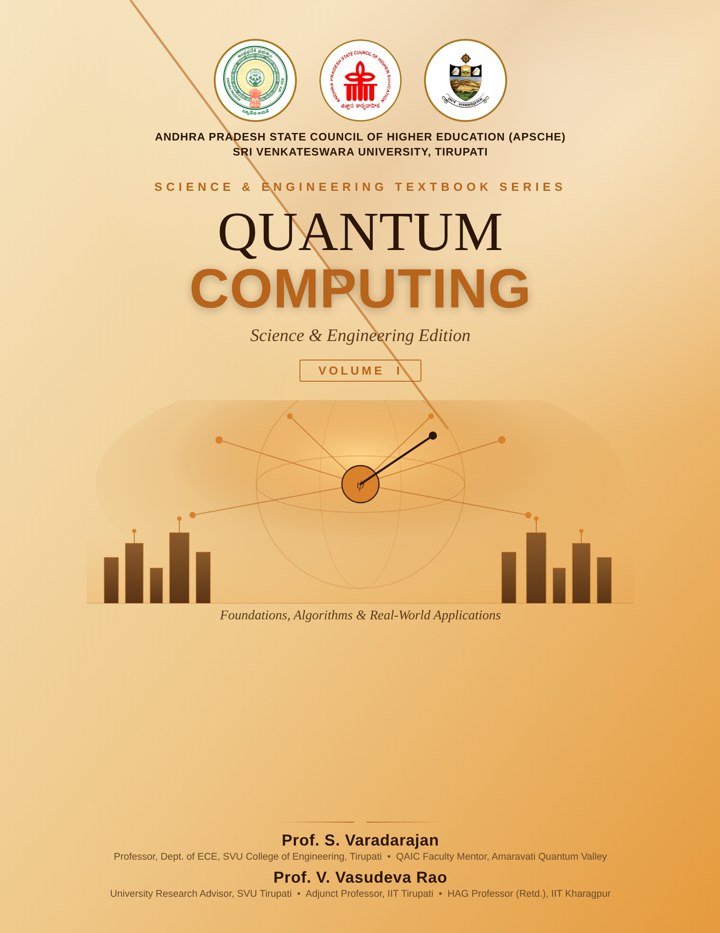
A student-friendly introduction to qubits, quantum circuits, algorithms, error correction and the real industrial use cases emerging from India's own Amaravati Quantum Valley. Written for readers with curiosity, not a physics degree.
You do not have to read the book front to back. Each card opens the book at the exact page.
Each unit opens with a case study, introduces the pioneers behind the ideas, works through the theory and ends with a Qiskit laboratory or an applied use case. Click a section to open it.
“A dependable, genuinely teachable foundation in one of this decade's defining technologies.”
“A sound, rigorous introduction — written by mentors for the students they teach.”
“Honest about what quantum computing can — and cannot yet — do.”
It explains who the book is for, the learning approach, and how AI assistance was used under the authors' direction. Preface, p. 7
Every unit has a Realization Lab built on Qiskit. Run it yourself in a free Python or notebook environment as you read.
Each unit ends with a self-check, then a Bridge to the next unit, so you can test yourself before continuing.
Use your PDF viewer's search, the side bookmarks, or the Subject Index (p. 97). Acronyms are listed on p. 14.

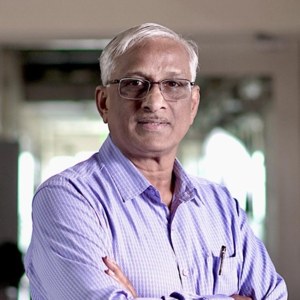
Professor, Dept. of ECE, Sri Venkateswara University College of Engineering, Tirupati. Principal architect of the SVUCE “Elements of Quantum Computing” syllabus; District Quantum Mentor, Chittoor cluster, Amaravati Quantum Valley.

University Research Advisor, SVU Tirupati; Adjunct Professor, IIT Tirupati; HAG Professor (Retd.), IIT Kharagpur, Cryogenic Engineering Centre. Four decades of research in superconductivity and cryogenics.
Found an error, an unclear explanation or a broken link? Tell the authors. Your comments will go into the next edition.
Write to the authors